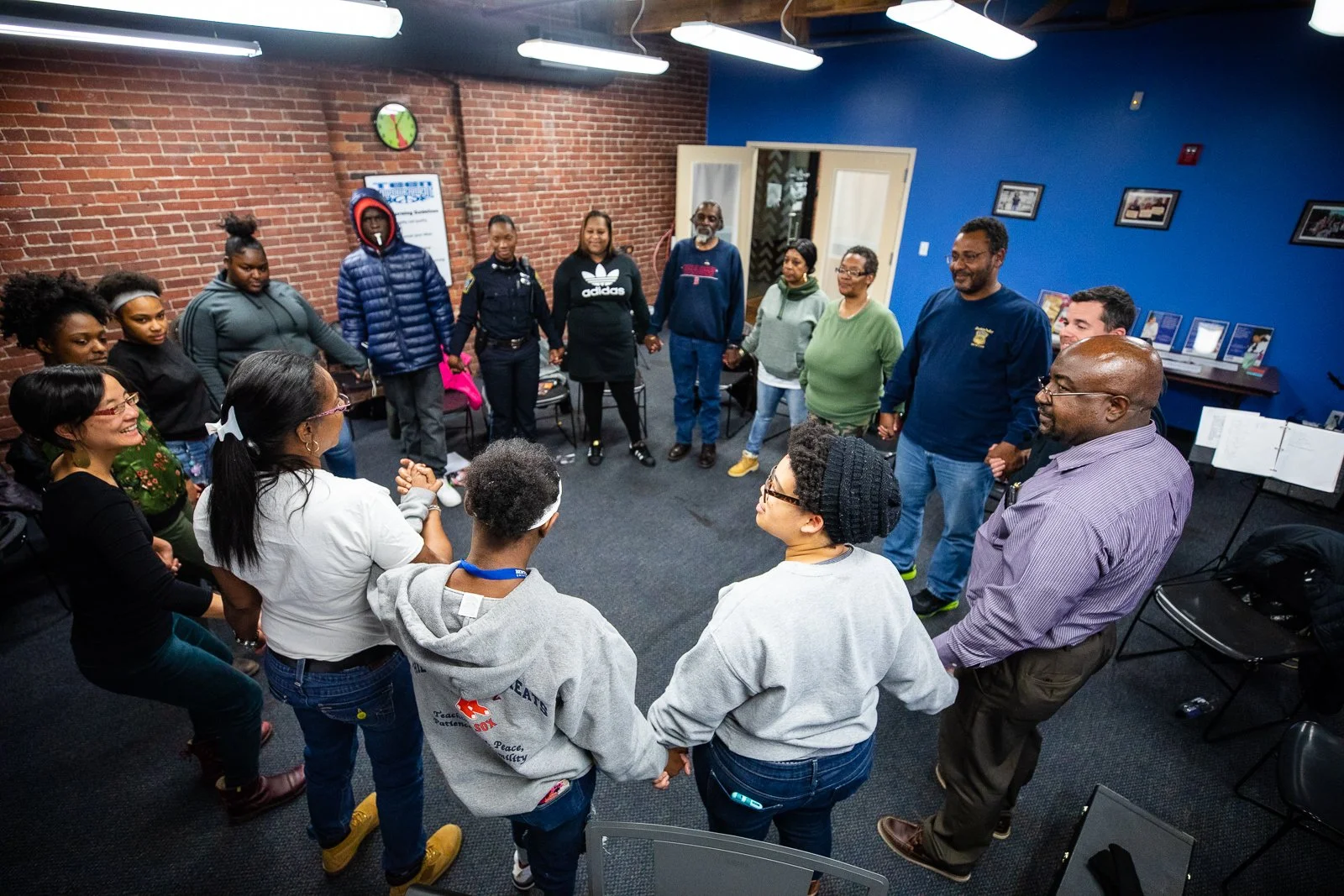
Code Listen (2016-2020)
Project: Community Music for healing and dialogue across differences
Role: Lead Artist, Organizer, Workshop Leader, Composer
Location: multiple, including Boys & Girls Club of Mattapan, Isabella Stewart Gardner Museum in Boston and Kennedy Center for the Performing Arts in Washington DC
Audience: Boston residents, museum-goers, and arts-events audience
Partners: City of Boston Office of Arts and Culture; Boston Police Department; non-profits Teen Empowerment, Legacy Lives On, Louis D. Brown Peace Institute. Funding from City of Boston Office of Arts and Culture, New England Foundation for the Arts, The Boston Foundation, Celebrity Series of Boston, Isabella Stewart Gardner Museum.
Photo: Robert Torres / Celebrity Series of Boston
SYNOPSIS:
Code Listen was started by Shaw Pong as an inaugural City of Boston Artist-in-Residence in 2016. The initial residency included musical memorials to loved ones lost to homicide, music-dialogue workshops with police and youth (including youth in juvenile detention), research as an artist “embedded” in a local police station, and the formation of a music-dialogue ensemble of Boston police musicians and youth artists.
The ensemble was expanded in 2017 to include 5 mothers and 2 siblings who have lost a family member to homicide, all from the grassroots homicide survivor organization, Legacy Lives On, founded by Clarissa Turner. The Code Listen ensemble created an 80-minute original performance interweaving original music by ensemble members, original music by Liu based on interviews with ensemble members, first-person storytelling, and audience dialogue. The piece was performed, with support from professional musicians, at numerous community venues as well as the Isabella Stewart Gardner Museum in Boston and the Kennedy Center for the Performing Arts in Washington DC.
Through collaborative music-making and listening to one another’s stories, as well as the powerful loving leadership of the mothers in the group, the ensemble built strong trusting relationships amongst themselves. The ensemble’s performances offered audiences a hopeful microcosm of what bridges can be built when we listen deeply to one another.
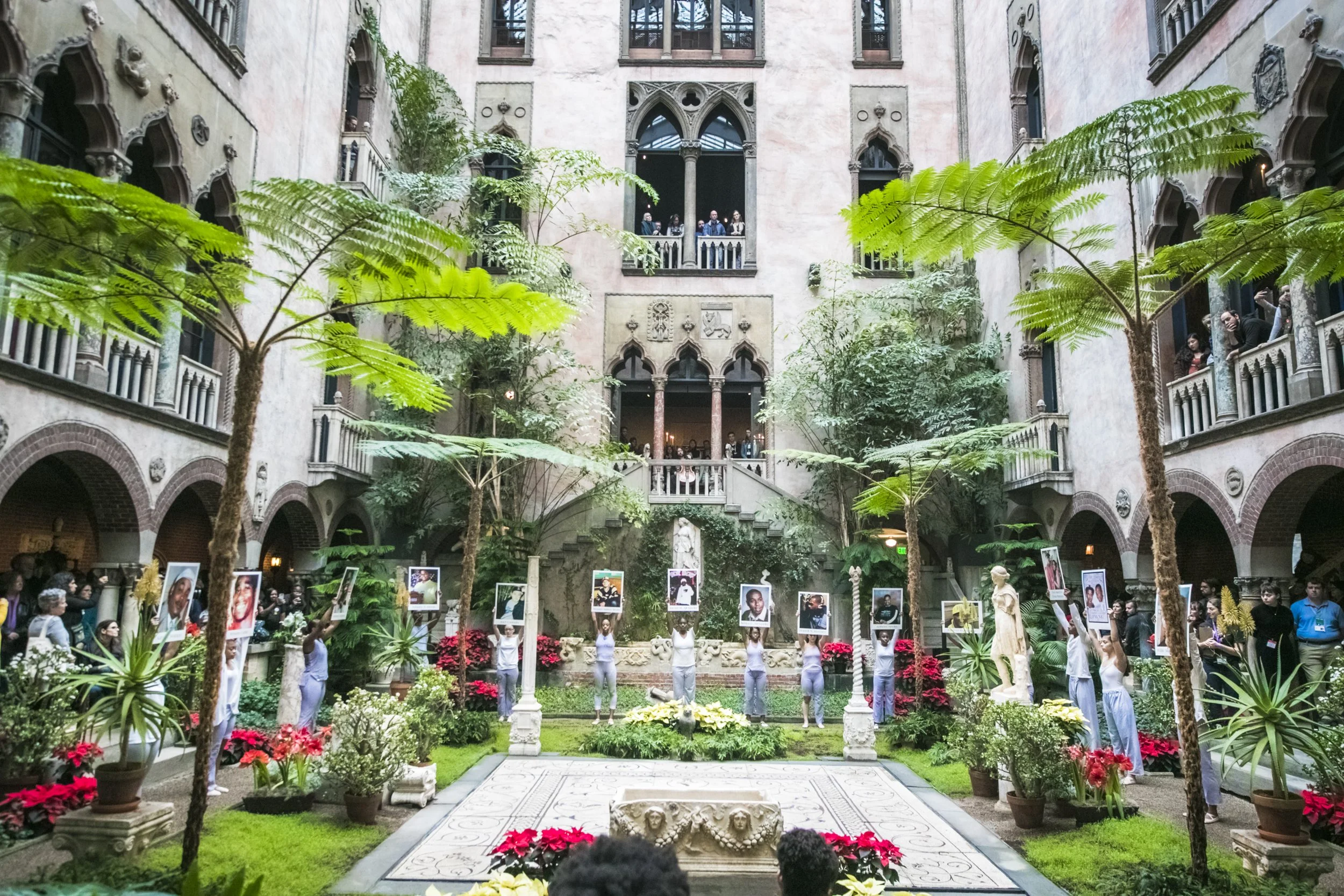
Photo: Matt Teuten
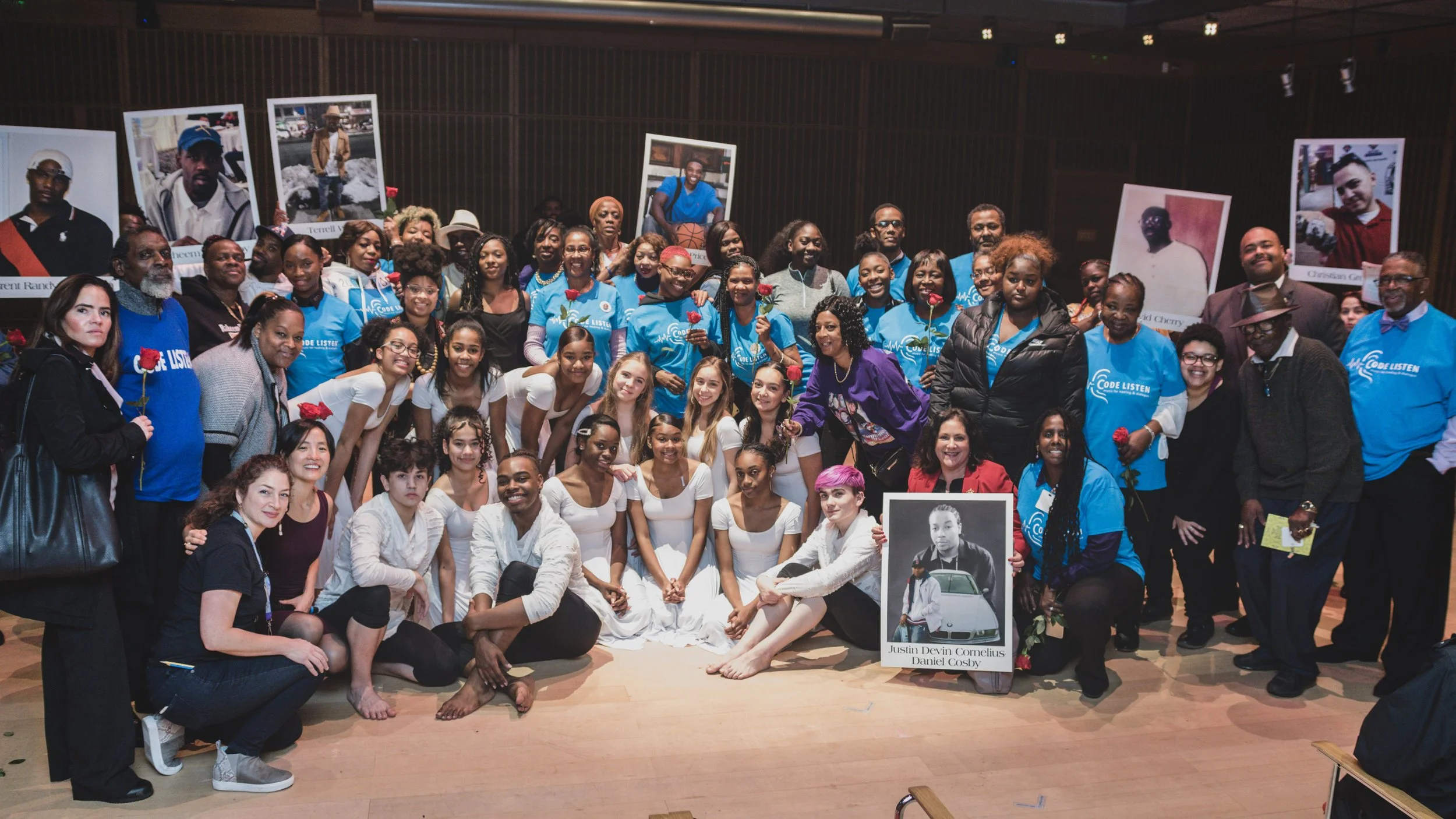
Photo: Steve Osemwhenkae